
Social Media Marketing in 2026
Published 17 Sep 2026
Social media has changed dramatically. A few years ago, businesses could publish a photo, add a few hashtags, and expect people to notice them. In 2026, that approach is no longer enough.
Today, social media has become a place where customers discover brands, search for services, compare businesses, read reviews, watch product demonstrations, ask questions, and even make purchasing decisions.
For businesses, this creates a huge opportunity. But it also creates competition. Thousands of brands are publishing content every minute. The challenge is no longer simply being present on social media. The real challenge is creating content that people actually want to stop, read, watch, share, and act on.
“Social media success is not about how often you post. It is about how often your content gives people a reason to stop scrolling.”
A strong social media marketing strategy can help businesses turn everyday online attention into website traffic, enquiries, leads, and eventually customers.
What Is Social Media Marketing?
Social Media Marketing, commonly called SMM, is the process of using platforms such as Instagram, Facebook, LinkedIn, YouTube and other social networks to promote a business, communicate with potential customers, build brand awareness, drive website traffic and generate leads or sales.
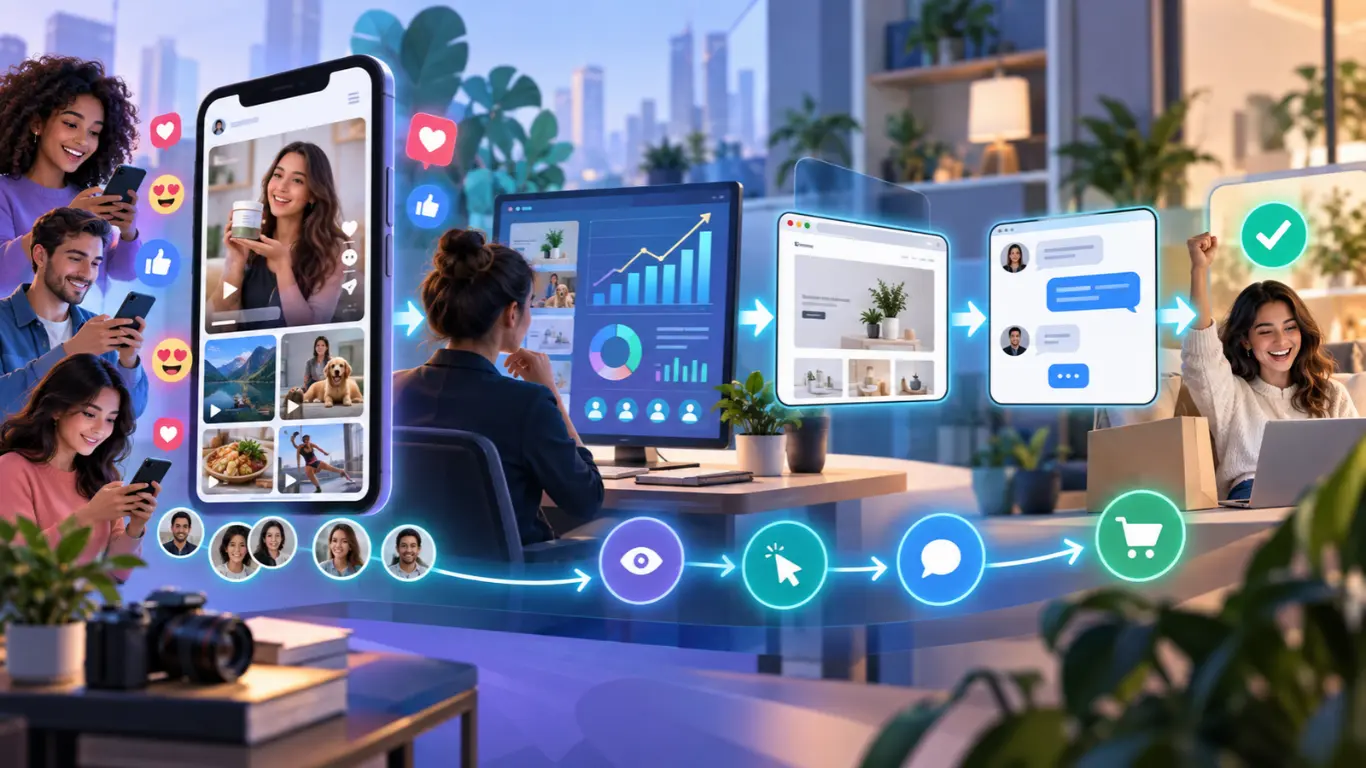
However, good social media marketing is much more than uploading posts. Imagine someone discovers your business through an Instagram Reel. They like the video, visit your profile, read a few posts, check your website, search your company name on Google and finally send you a WhatsApp message. That complete journey may have started from just one piece of social media content.
“A follower is not the final goal. A follower is simply the beginning of a potential customer journey.”
Why Social Media Marketing Matters More in 2026
Modern customers rarely make decisions immediately after seeing a business for the first time. Before contacting a company, they often research it.
They may check the business website, Instagram account, Google reviews, LinkedIn page, YouTube videos and customer comments before deciding whether the company feels trustworthy.
That means your social media profile has become part of your digital reputation. Imagine two companies offering exactly the same service. The first company has an inactive Instagram account with its last post published six months ago. The second regularly shares helpful videos, customer experiences, industry advice, case studies and useful tips. In many cases, the second business will appear more active, knowledgeable and trustworthy.
“People rarely buy from the first post they see. They buy after repeated moments of trust.”
Social Media Is Becoming a Search Platform
Another important shift is happening in the way people discover information online. Users are increasingly searching directly inside social media platforms.
Instead of searching only on Google, someone looking for marketing advice might search for phrases such as “Instagram marketing tips,” “social media marketing agency,” “how to generate leads from Instagram,” or “digital marketing tips for small businesses.”
For businesses, this means social media content should become more searchable. Instead of writing a vague caption such as “Another amazing project completed!”, a business could write a more descriptive caption explaining exactly what was improved, how it was done, and what result it created.
SEO, AEO and GEO Are Coming Together
Digital marketing is no longer only about traditional SEO. Businesses now need to think about SEO, AEO and GEO together.
- SEO: Helps content appear in search engines.
- AEO: Focuses on creating clear answers to questions users frequently ask.
- GEO: Focuses on creating useful, trustworthy and well-structured information that AI-powered search experiences can understand and potentially reference.
All three strategies have something important in common: they reward helpful content. Businesses should create resources that answer real questions customers are already asking instead of publishing only promotional material.
“The future of digital visibility belongs to brands that answer questions better, not brands that simply repeat keywords more often.”
Stop Posting Only Promotional Content
One of the biggest social media mistakes businesses make is talking about themselves all the time. Constantly posting “Our company offers this,” “We provide this service,” or “Contact us today” can quickly become repetitive.
People follow brands because they receive something valuable in return. That value might be education, entertainment, inspiration, useful information or solutions to everyday problems.
Useful Social Media Content Ideas
- Why Instagram engagement suddenly drops.
- How small businesses can generate leads through social media.
- Mistakes businesses make while running Facebook ads.
- Ways to improve website conversions.
- How to create a monthly social media content plan.
“Teach before you sell. Help before you promote. Trust usually comes before conversion.”
Short-Form Video Is a Powerful Discovery Tool
Reels, Shorts and other short-form video formats have transformed social media marketing. People want information quickly, and a complex topic can often be introduced through a short video.
For example, an agency could create a video titled “3 Reasons Your Instagram Isn’t Generating Leads.” The video could explain issues such as targeting the wrong audience, publishing without a clear call-to-action, or sending users to a poorly optimized website.
One piece of content can also be converted into several formats. A detailed blog can become a Reel, LinkedIn post, Instagram carousel, Story question, email newsletter and YouTube Short. This is known as content repurposing.
Followers Don’t Automatically Mean Customers
One of the biggest misconceptions in social media marketing is that having more followers automatically means having more business. It doesn’t.
A business with a smaller but highly relevant audience may generate more enquiries than a business with a much larger but less relevant following. Instead of chasing follower numbers alone, businesses should focus on attracting the right audience.
“Ten thousand followers who never need your service are less valuable than one hundred potential customers who genuinely trust your business.”
Every Social Media Post Should Have a Purpose
Businesses sometimes post simply because their content calendar says something must be published that day. But every post should have a clear reason.
- Increase awareness.
- Educate customers.
- Generate discussion.
- Build trust.
- Send visitors to your website.
- Generate enquiries.
A simple customer journey may look like this: Discover → Learn → Engage → Trust → Visit → Enquire → Convert.
Organic Social Media and Paid Advertising Should Work Together
There is often a debate about whether businesses should focus on organic content or paid advertising. In reality, a strong strategy can combine both.
Organic content helps build credibility and relationships over time, while paid advertising allows businesses to reach targeted audiences more quickly.
“Paid media can buy attention. Good content helps turn that attention into trust.”
Social Media Marketing Can Support Website Traffic
Your social media profile should not become an isolated digital island. Social platforms should connect naturally with your website.
- An Instagram Reel can send users to a detailed blog.
- A LinkedIn post can direct readers to a case study.
- A Facebook advertisement can take users to a lead-generation landing page.
- A YouTube video can direct viewers to a service page.
Social media attracts attention while the website provides additional information and creates conversion opportunities.
Social Media Marketing for Small Businesses
Many small businesses assume social media marketing only works for large companies with expensive production teams. That is not true.
Small businesses often have one major advantage: authenticity. Customers enjoy seeing the real people behind a company.
- An interior designer can share the transformation of a small apartment.
- A restaurant can show how a popular dish is prepared.
- A real estate consultant can explain a local property market.
- A digital marketing company can share an SEO tip that solves a common business problem.
“You don’t need to look like the biggest brand online. You need to become the most useful brand for your audience.”
The Biggest Social Media Marketing Mistake
Perhaps the biggest mistake businesses make is expecting immediate results. Social media usually works through accumulated trust.
Someone may watch several videos before visiting your profile, read multiple posts before visiting your website, or follow your brand for weeks before sending an enquiry. That does not mean the earlier content failed. Each interaction can play a role in building familiarity.
Successful social media marketing therefore requires consistency, testing and patience.
What Should Businesses Actually Measure?
Likes feel good and followers look impressive, but businesses should also measure what happens after engagement.
Important Social Media Metrics
- Website visits.
- Profile visits.
- Enquiries.
- WhatsApp messages.
- Lead quality.
- Conversion rates.
- Cost per lead.
- Revenue generated from campaigns.
“The best social media metric isn’t always a like. Sometimes it is the conversation that happens after the post.”
What Is the Future of Social Media Marketing?
Social media will continue becoming more connected to search, artificial intelligence, shopping and customer service. Businesses that depend entirely on promotional posts may struggle to maintain attention.
The brands most likely to stand out will be those that continuously create useful content around real customer questions.
“What does our customer need help understanding today?”
Final Thoughts
Social media marketing in 2026 is not simply about posting more content. It is about creating the right content for the right audience at the right stage of their journey.
Successful brands will combine social media strategy with SEO, AEO, GEO, useful educational content, short-form video, paid media and strong website experiences.
“Don’t build a social media page that only gets seen. Build a digital presence that gets remembered, trusted and contacted.”
Grow Your Business with Affilify Media
At Affilify Media, we believe digital marketing should do more than create impressions. It should create measurable business opportunities.
From Social Media Marketing and SEO to Performance Marketing, Paid Media, SMS Marketing, WhatsApp Marketing and Web Development, Affilify Media helps businesses build stronger digital visibility and turn online attention into meaningful customer actions.
If your social media channels are receiving views but not generating enough traffic, enquiries or leads, it may be time to move from random posting to a strategy built around discovery, trust and conversion.